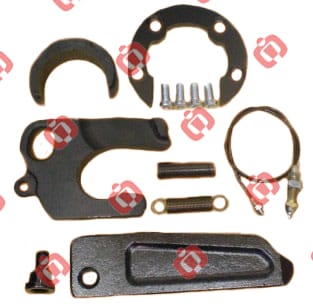
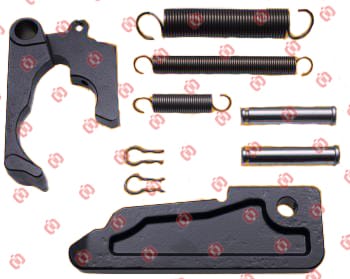
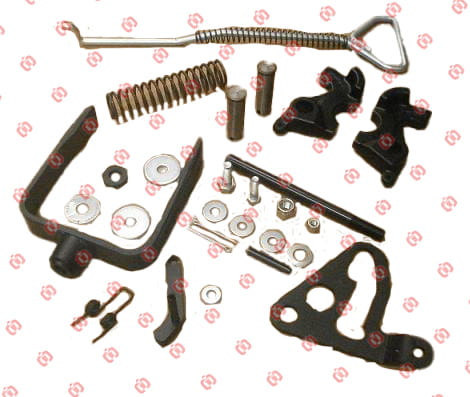
In the road freight transport ecosystem, efficiency and innovation in materials are measured not only in litres of fuel per kilometre, but also in the operational availability of the fleet. Every hour a lorry spends in the workshop due to premature failure of a wear component is a direct loss of competitiveness.
Historically, preventive maintenance was based on the periodic replacement of metal parts under the premise that ‘steel always wears out’. However, materials science has evolved dramatically. At Industrias Onyarbi, we understand that innovation in alloys and polymers is not a luxury, but a necessity to withstand the increasing load demands and extreme weather conditions faced by modern vehicle assemblies.
Advanced Metallurgy: Beyond Conventional Steel
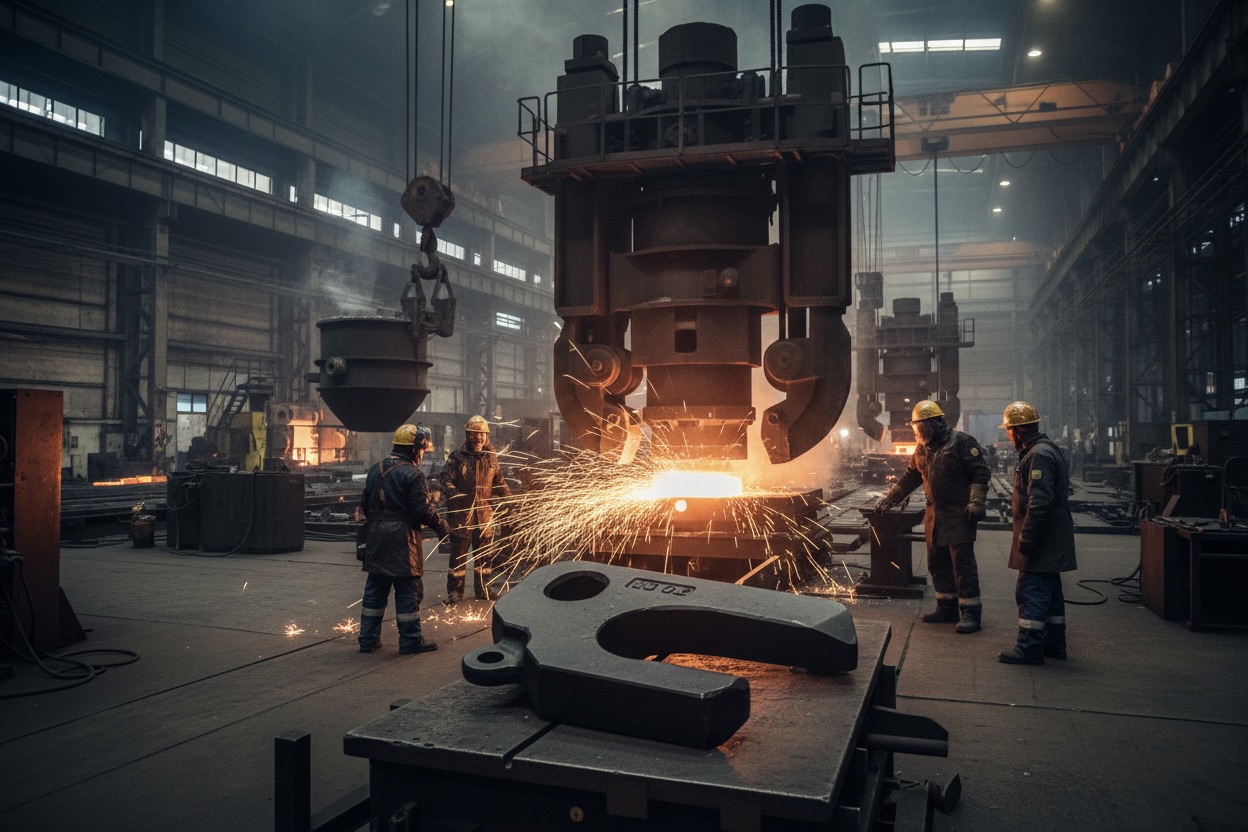
Wear and tear on truck and trailer parts is mainly caused by three phenomena: abrasion, mechanical fatigue and corrosion. To combat these factors, the industry has moved from using basic carbon steels to high-strength alloys and precision heat treatments.
High-strength steels (HTS) and surface treatments
Parts subject to constant friction, such as bolts, bushings and support plates, are now manufactured with steels that incorporate elements such as chromium, molybdenum and vanadium, an innovation in materials from Industrias Onyarbi. These components improve the toughness of the material, allowing the part to be hard enough to withstand friction, but elastic enough not to fracture under sudden impacts.
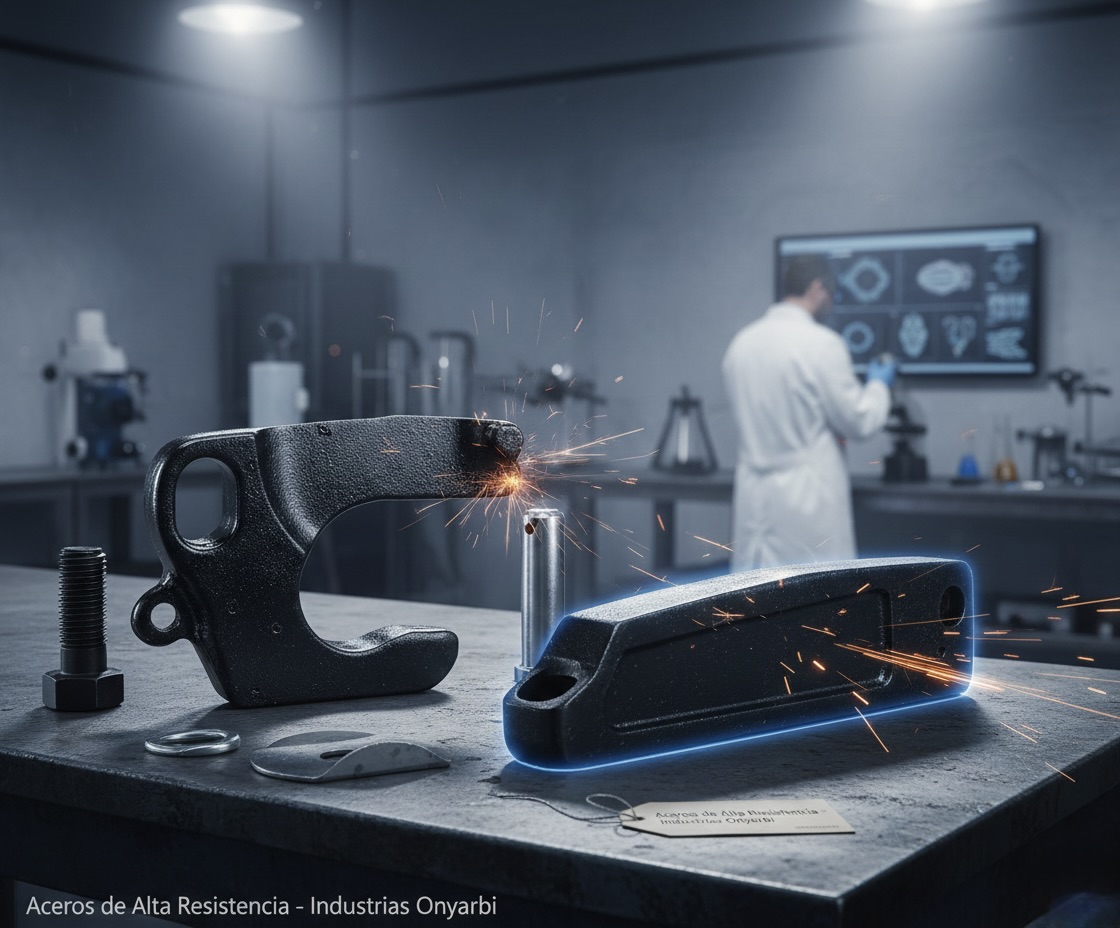
The use of gas nitriding and selective induction allows an extremely hard ‘sacrificial layer’ to be created on the surface of the part, while maintaining a ductile core. This is vital in suspension and braking system components, where structural integrity is non-negotiable.
The Critical Challenge: The Fifth Wheel
If there is one component that epitomises the battle against wear and tear, it is the fifth wheel. This element is the link between the tractor unit and the semi-trailer; it is the point where massive longitudinal, lateral and vertical forces converge, and it is where Industrias Onyarbi has placed special emphasis on innovation in materials.
Dynamics of Forces and Wear
During transport, the fifth wheel supports:
- Vertical loads: The weight of the loaded semi-trailer constantly presses down on the plate.
- Traction and Braking Forces: The king pin exerts extreme pressure on the fifth wheel coupling every time the vehicle accelerates or brakes.
- Oscillations and Torsion: On bends or uneven terrain, the relative movement between the fifth wheel and the semi-trailer generates severe mechanical friction.
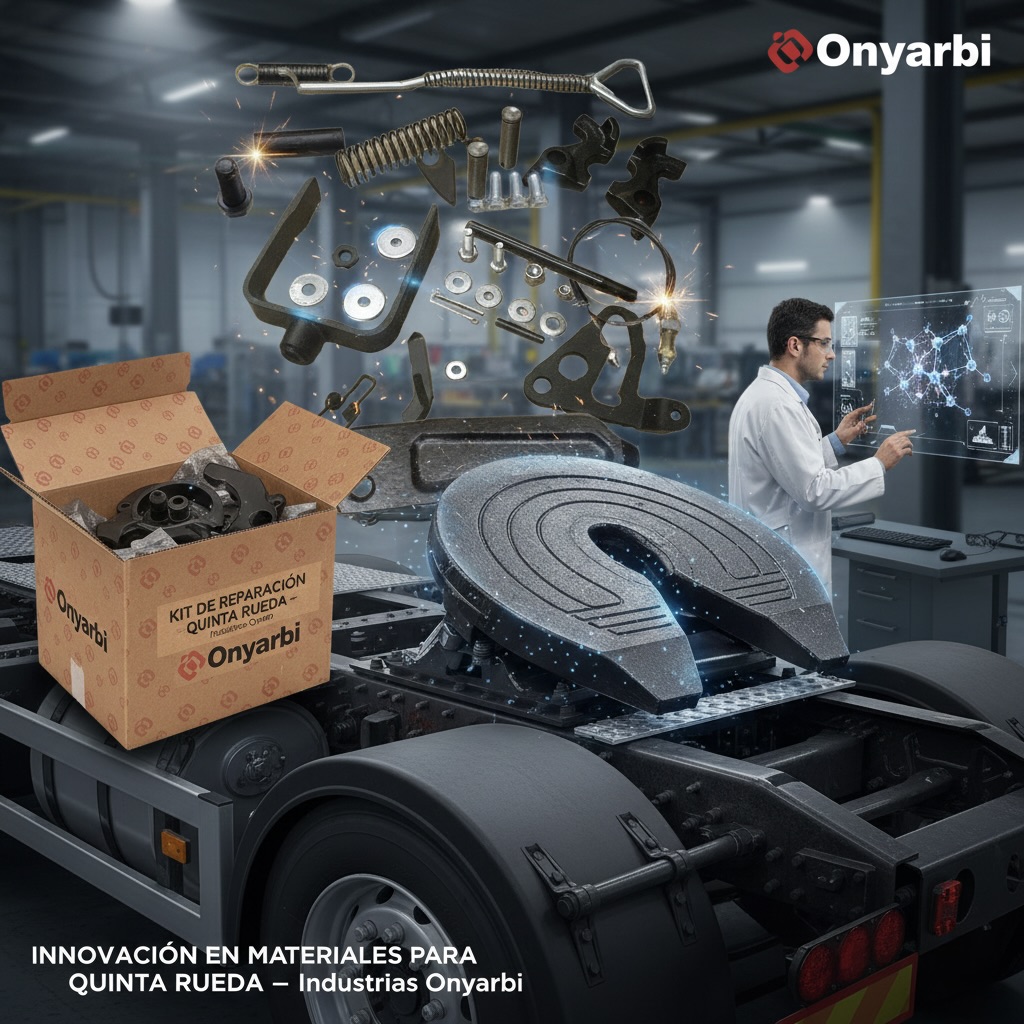
Innovation in the Plate and Closing Mechanisms
The current trend in materials innovation is shifting towards the use of spheroidal graphite cast iron. Unlike traditional grey cast iron, this material offers superior tensile strength and impact absorption capacity, which extends the service life of the component.
However, the most disruptive advance is in low-friction coatings. Traditionally, fifth wheels required large amounts of grease to function. Innovation in materials has enabled the development of plates with ultra-high molecular weight (UHMW) polymer inserts or reinforced industrial Teflon coatings. These materials allow for:
- Reduce or eliminate the need for manual lubrication.
- Minimise wear on the king pin, which is complex and costly to replace.
- Increase security by maintaining a more consistent connection with less slack.
Polymers and Composite Materials: The Silent Heroes
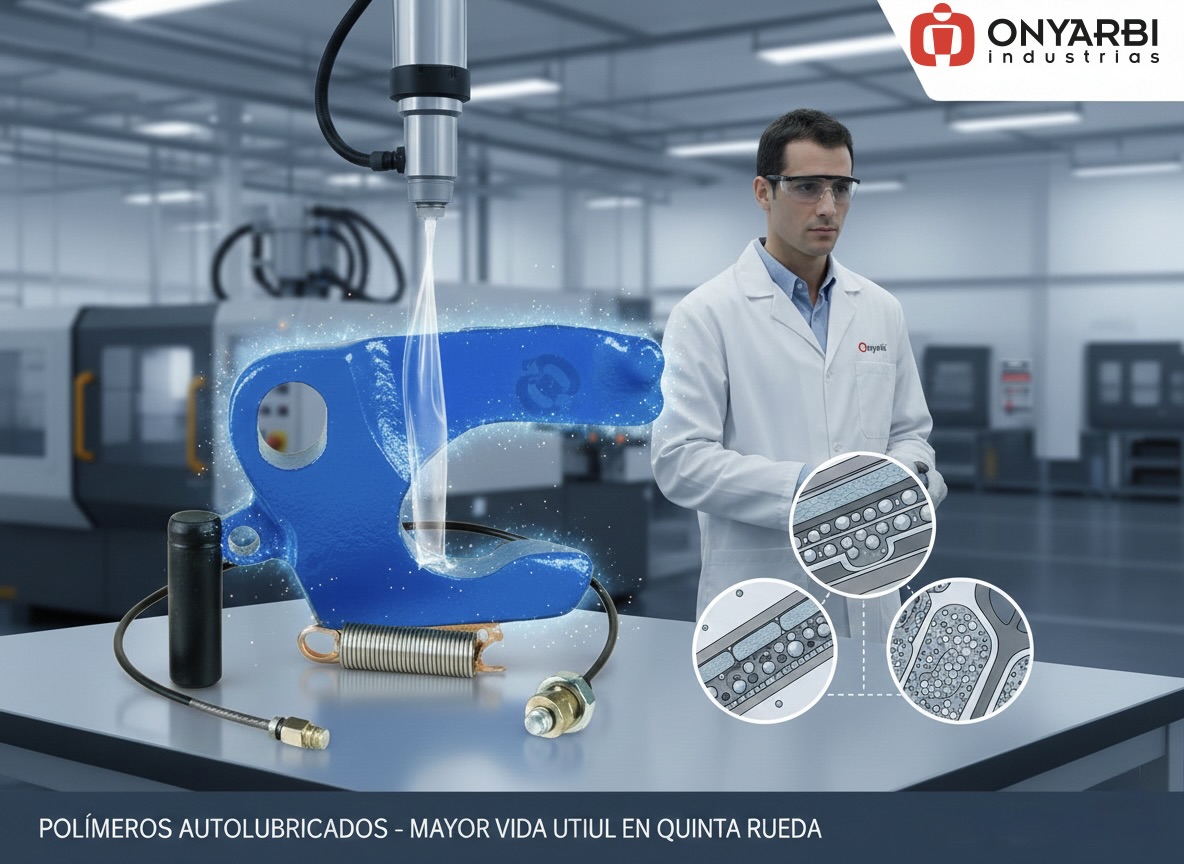
Not everything is metal in materials innovation. Replacing bronze or steel in bushings and washers with composite materials has revolutionised the articulation points in trailers and semi-trailers.
Advantages of Self-Lubricating Materials
New engineered polymers incorporate solid lubricants into their molecular structure. When friction occurs, the material releases micro-amounts of lubricant, maintaining a low and constant coefficient of friction. This is especially critical in dusty or humid environments, where conventional grease tends to mix with dirt, creating an abrasive paste that accelerates wear rather than preventing it.
Impact of Innovation in Materials on Total Cost of Ownership (TCO)
From a fleet manager’s perspective, investing in spare parts made from innovative materials translates into a direct improvement in TCO (Total Cost of Ownership). Although the initial cost of a ceramic-coated part or a low-maintenance fifth wheel may be higher, the long-term benefits are clear:
| Savings Factor | Impact with Innovative MaterialsService Intervals |
| Service Intervals | They double or triple, reducing downtime. |
| Lubricant consumption | Up to 80% reduction in fifth wheel and articulation systems. |
| Road Safety | Lower risk of disengagement or structural failure due to fatigue. |
| Sustainability | Less grease spillage into the environment and lighter parts that reduce consumption. |
Conclusion: The Commitment of Industrias Onyarbi
At Industrias Onyarbi, we don’t just sell parts; we select and manufacture solutions that incorporate these technological advances. The evolution of friction materials, innovation in materials and engineering applied to fifth wheels are the pillars that enable our customers to tackle the most demanding routes in complete safety.
Innovation is not just about creating something new, but also about making existing products last longer, perform better and be safer. In a globalised market where every minute counts, choosing the right replacement material can mean the difference between a successful journey and an unexpected stop.
Are you looking to optimise the durability of your hitch equipment? At Industrias Onyarbi, we offer a wide range of state-of-the-art fifth wheel and coupling solutions. Contáctenos hoy mismo para recibir asesoramiento técnico personalizado sobre los mejores materiales para su flota.