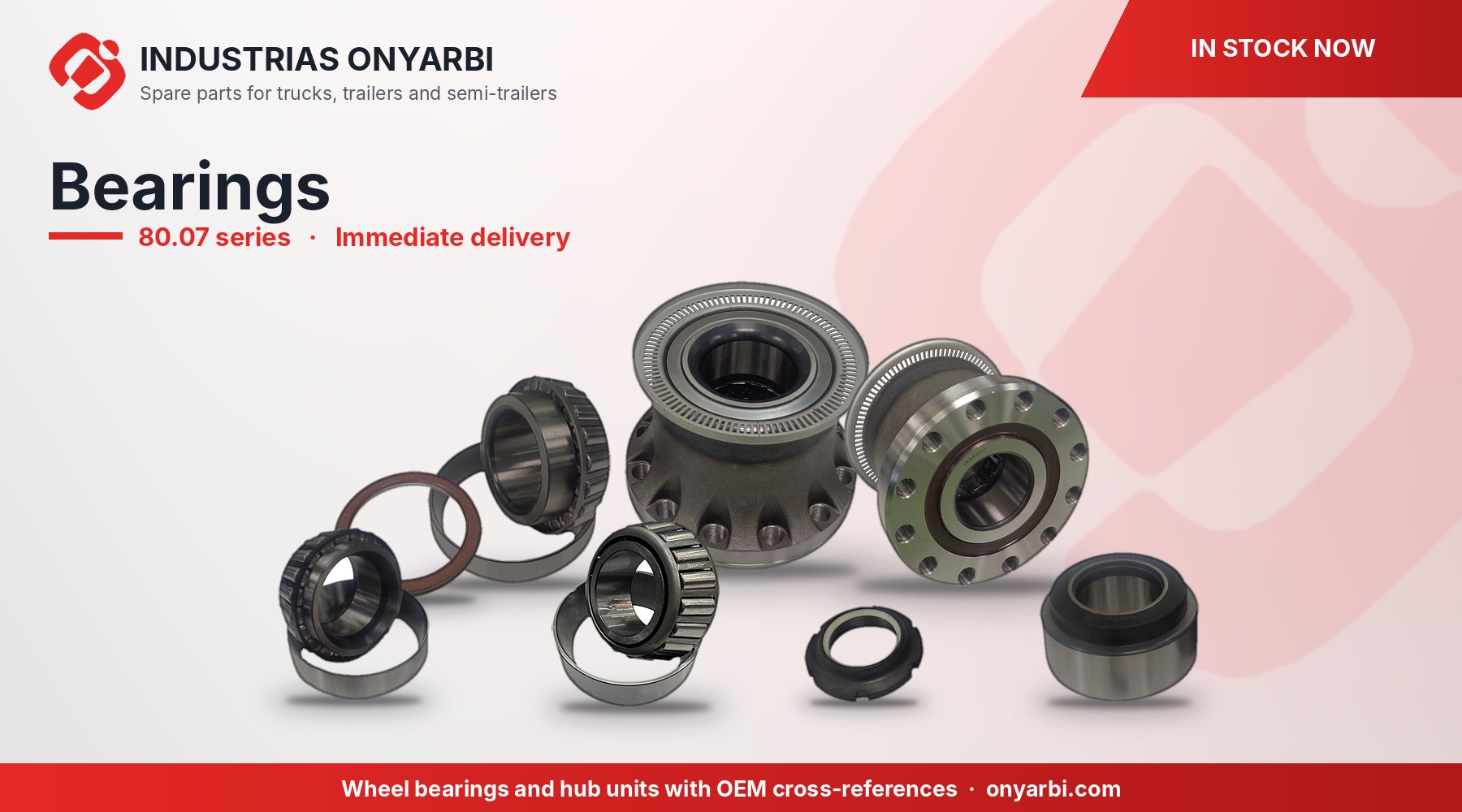
Truck bearings for trucks, trailers and semi-trailers: types, failures and how to choose the right replacement
A practical guide from Industrias Onyarbi for workshops, distributors and hauliers.
Truck bearings are small parts that carry enormous loads. Every wheel on a loaded semi-trailer turns on them for hundreds of thousands of kilometres, through heat, water, road salt and potholes.
When a bearing fails, it doesn't give polite warning: first a hum, then play and, if nobody acts, a locked wheel or a hub that overheats to the point of fire risk.
At Industrias Onyarbi we manufacture and distribute spare parts for commercial vehicles, and bearings are one of the product families that raise the most questions among workshops, distributors and hauliers. In this article we cover the main types, how to spot a worn bearing in time and what to check when ordering a replacement. At the end we introduce our 80.07 series bearing range.
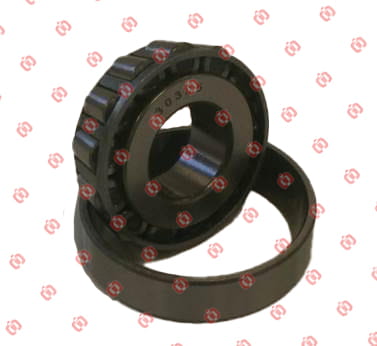
Why truck bearings are a critical component
A bearing has a simple job: to let one part rotate on another with as little friction as possible while carrying a load. It does this by replacing sliding with rolling, using balls or rollers that run between two hardened steel rings.
In a passenger car that load is moderate. In a truck or semi-trailer, each axle can carry several tonnes, plus side forces in corners, impacts from the road surface and heat coming from the brakes. That is why truck bearings are designed with:
A low-quality bearing doesn't just wear out sooner: it puts the hub, the stub axle, the brakes and, in the worst case, road safety at risk.
Types of truck bearings: ball, hub and driveline
Not all bearings do the same job. On a commercial vehicle there are three main families, each designed for a different kind of load.
Ball bearings
The most widely used in general engineering. The balls sit on a small contact surface, which reduces friction and allows high rotation speeds. They handle radial load (pushing towards the centre of the shaft) well, plus some axial load.
They are usually factory-sealed (2RS rubber seals or ZZ metal shields), so they need no regreasing during their service life.

Hub and wheel bearings
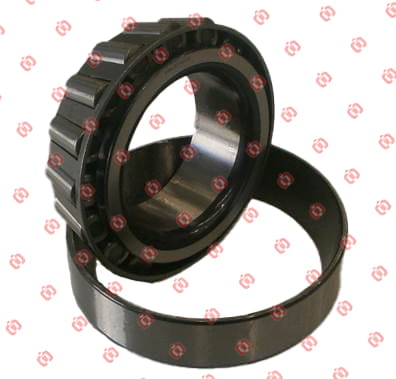
These work the hardest. They carry the weight of the vehicle and its cargo, the side forces in corners and the heat from the brakes. That is why they are usually tapered roller bearings, which spread the load along a line of contact instead of a point, and handle high radial and axial loads at the same time.
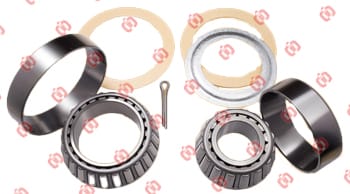
They are normally fitted in pairs (inner and outer bearing) or as compact hub units, pre-adjusted and pre-greased, which are now standard on modern trailer and semi-trailer axles.
Driveline bearings
These work in the driveline: the centre support bearing of the drive shaft (propshaft), the clutch release bearing, and the gearbox and differential bearings. They turn faster than wheel bearings and are subject to constant vibration.
The propshaft centre support is a classic wear point: when its bearing or rubber mount deteriorates, you get vibration under acceleration and a dull noise under the cab.
Worn truck bearings: warning signs for drivers
The driver is the first person who can spot a bearing in poor condition, long before it fails. These are the most common signs:
Don't wait for the next service. A wheel bearing that starts making noise can deteriorate within days, especially at full load and in summer.
Fitting and maintenance essentials
Many premature failures in truck bearings are not down to the part itself, but to how it was fitted. These are the points that make the difference in the workshop:
- Absolute cleanliness. A single grain of sand between roller and raceway is enough to start wear. Open the packaging just before fitting.
- The right tools. Never hit the bearing directly or transmit force through the rolling elements. Use pullers and fitting sleeves that bear on the correct ring.
- Manufacturer's torque and preload. On tapered rollers, a nut that is too tight generates heat; too loose, it creates play.
- The right grease, in the right amount. Not too little, not too much: excess grease also causes overheating.
- New seals. Reusing a seal to save a few euros is the fastest way to end up replacing the bearing again.
- Check the other side. If one wheel bearing has failed, check the one on the other side of the axle: both have worked in the same conditions.
During routine services, checking play and hub temperature takes minutes and prevents downtime that costs days.
The Industrias Onyarbi bearing range
In our catalogue of truck bearings for trucks, trailers and semi-trailers we have brought together a selection of ball, hub and driveline bearings under the 80.07 series. Every reference comes with its cross-reference to the original part number (OEM) and to the main aftermarket brands, so ordering is quick and error-free.
| Onyarbi reference | Type | Application |
|---|---|---|
| 80.07.207 | Wheel bearing | Driveline |
| 80.07.218 | Tapered roller | Driveline |
| 80.07.219 | Ball | Driveline |
| 80.07.222 | Tapered roller | Driveline |
| 80.07.226 | Tapered roller | Driveline |
| 80.07.229 | Ball | Driveline |
| 80.07.232 | Tapered roller | Driveline |
| 80.07.234 | Tapered roller | Driveline |
| 80.07.235 | Ball | Driveline |
| 80.07.238 | Tapered roller | Driveline |
| 80.07.240 | Tapered roller | Driveline |
| 80.07.254 | Tapered roller | Driveline |
| 80.07.256 | Ball | Driveline |
| 80.07.263 | Ball | Driveline |
| 80.07.265 | Ball | Driveline |
| 80.07.266 | Ball | Driveline |
| 80.07.269 | Ball | Driveline |
<!-- IMAGE 5 (optional): uncomment and add the URL when the group photo is ready

What Onyarbi offers distributors and parts resellers
If you sell commercial vehicle parts, you know that the wrong bearing means a return, an unhappy workshop and a truck off the road. Our goal is to make sure that doesn't happen:
For the haulier, the result is simple: a reliable part, at the right price, available when needed.
Frequently asked questions about truck bearings
How often should wheel bearings be replaced?
There is no single figure: it depends on the bearing type, the load and how the vehicle is used. The sealed hub units on modern trailers are designed to last a very long distance without maintenance, but you should check play and temperature at every scheduled service and follow the axle manufacturer's plan.
Is it safe to drive with a noisy bearing?
It is not recommended. Noise means wear has already started and it can progress very quickly. The sensible thing is to take the vehicle to a workshop as soon as possible.
What is the difference between a ball bearing and a tapered roller bearing?
A ball bearing turns with less friction and at higher speeds, but carries less load. A tapered roller bearing spreads the load along a line of contact and copes better with weight and side forces, which is why it is the usual choice for truck and semi-trailer hubs.
How do I find the Onyarbi equivalent of my bearing?
Search our website by the original part number or by the reference of the brand currently fitted. If you can't find it, our sales team will help you identify it.
Reliable bearings to keep your truck rolling
Quality truck bearings, correctly chosen and correctly fitted, prevent breakdowns on the road, protect hubs, brakes and driveline, and keep the vehicle where it belongs: on the road.
{ "@context":"https://schema.org", "@type":"FAQPage", "mainEntity":[ {"@type":"Question","name":"How often should wheel bearings be replaced?","acceptedAnswer":{"@type":"Answer","text":"There is no single figure: it depends on the bearing type, the load and how the vehicle is used. Check play and temperature at every scheduled service and follow the axle manufacturer's plan."}}, {"@type":"Question","name":"Is it safe to drive with a noisy bearing?","acceptedAnswer":{"@type":"Answer","text":"It is not recommended. Noise means wear has already started and it can progress very quickly. The sensible thing is to take the vehicle to a workshop as soon as possible."}}, {"@type":"Question","name":"What is the difference between a ball bearing and a tapered roller bearing?","acceptedAnswer":{"@type":"Answer","text":"A ball bearing turns with less friction and at higher speeds, but carries less load. A tapered roller bearing spreads the load along a line of contact and copes better with weight and side forces."}}, {"@type":"Question","name":"How do I find the Onyarbi equivalent of my bearing?","acceptedAnswer":{"@type":"Answer","text":"Search the Industrias Onyarbi website by the original part number or by the reference of the brand currently fitted. If you can't find it, the sales team will help you identify it."}} ] }